By Movie Videos 4u News Matters
LONDON — Video hosting giant Vimeo is facing a wave of intense criticism from creators, publishers, and long-term members over an aggressive rollout of its third-party age verification framework. Users are branding the system a “bureaucratic mess” that lacks basic contextual common sense.
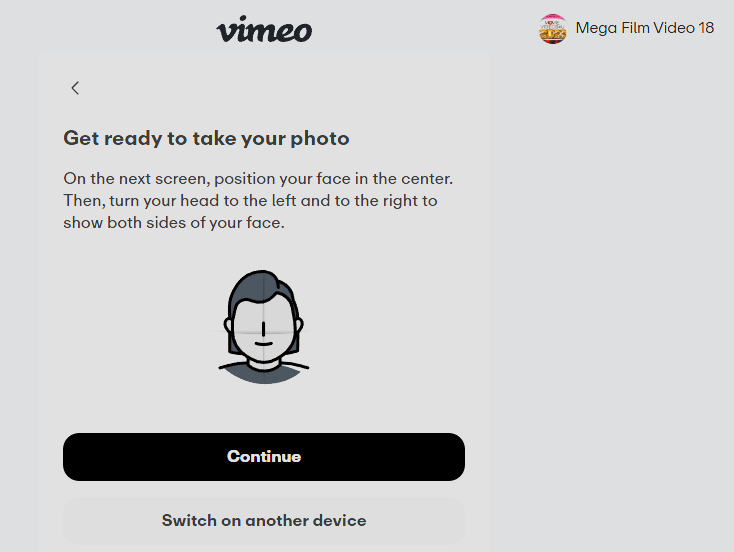
The controversy centres on a glaring systemic contradiction: users can seamlessly view hosted videos embedded directly within third-party articles, but the moment they try to click through to view the same clip or creator profile on Vimeo’s Main Website, they are locked behind an invasive biometric barrier demanding immediate facial scans or government-issued identification papers.
For media organisations and independent creators, this disjointed enforcement has laid bare the rank hypocrisy of modern web gating. The platform claims that safety emergency forces them to lock down standard content, yet they leave the exact same video streams wide open to anyone casually browsing external blogs.
The Investigation: Exposing a Deficit in Common Sense
To test how poorly optimised Vimeo’s algorithmic filters actually are, our newsroom investigated a video container locked behind their biometric wall. While attempting to access a creator channel profile named Mega Film Video 18, our long-standing corporate web terminal was abruptly redirected away from the media player and forced onto an isolated /age-verification landing page.
The prompt stated that we had to use a webcam to complete a “liveness check” to measure the geometry of our face. The system completely ignored the fact that our underlying device—verified through Apple’s secure hardware layer—already possesses over a decade of continuous history proving the operator is well past the legal age threshold.
To bypass this roadblock and look at the actual chronological facts, we audited the raw source data of the embedded video element on the original host webpage. The underlying layout iframe reads:
By isolating the raw numeric ID (273985854) and querying it directly against the platform’s open, developer-facing oEmbed metadata protocol feed (https://vimeo.com), we successfully extracted the unshielded backend creation logs without submitting a single trace of biometric data.
The raw timestamp revealed the truth:
- The Reality Check: The video was officially uploaded on June 7, 2018.
- The Chronological Flaw: This public video has existed safely on Vimeo’s servers for eight full years without a single community violation.
Treating a piece of historical public media that has stood for nearly a decade as an immediate, unrated high-risk hazard requiring modern biometric facial tracking shows a total breakdown of contextual awareness inside Vimeo’s compliance architecture.
Broken Silos vs. Unified Ecosystems
Vimeo’s defence is that regional mandates—such as the UK Online Safety Act and EU Digital Services Act—compel them to ensure strict age compliance. However, critics argue that their heavy-handed execution proves third-party web containers are structurally unequipped to handle verification gracefully compared to native hardware.
| Friction Category | Platform-Level Verification (e.g., Apple) | Third-Party Web Containers (Vimeo) |
|---|---|---|
| Trust Network | Leverages years of payment histories, local device security logs, and hardware tokens to verify status silently. | Completely blind. It views every login attempt identically, treating a 10-year veteran user like a brand-new account. |
| User Experience | Frictionless. Operates quietly in the device background without interrupting the content workflow. | High-friction. Interrupts navigation to demand instant webcam access or sensitive passport uploads. |
| Privacy Safeguards | Biometrics are processed entirely on local device chips and never shared over the web. | Ships personal data over to external third-party verification engines (like Persona). |
A Fractured Digital Panopticon
What makes the current iteration of Vimeo’s verification protocol so fundamentally hypocritical is the illusion of the wall itself. If a platform truly believes a video clip requires strict, biometric verification to protect audiences, leaving that video fully rendered and playable on third-party blogs while locking down the main website achieves nothing but user alienation.
Instead of building a common-sense trust network that evaluates the long-term standing of an account or the 8-year age of the video itself, Vimeo has built a fragmented, poorly designed digital gatehouse. Until web services learn to respect contextual metadata and integrate securely with existing native device authentications, independent journalism will continue to expose these platforms for what they are: out of touch, frustrating, and deeply anti-member.
Are you an independent creator or local business who has been locked out of your own media archive by these recent platform changes? We want to hear from you. Contact the Watford Herts London News desk to share your perspective for our upcoming follow-up report.
Technical Guide: How to Get Hidden Video Dates
When an age gate completely blocks a website’s visual frontend profile, the underlying data metadata can almost always be retrieved by calling standard APIs. Media platforms use these open protocols so external websites can preview video dimensions without requiring an individual user login session.
The oEmbed Protocol Trick
Instead of scanning a web page’s chaotic source code layout, journalists can use a structured query tool called oEmbed. By appending any public video ID to a platform’s base API string, the server is forced to output an open, unshielded JSON text feed.
When called, this feed bypasses browser-based biometric checks and directly returns the original text data block:
"upload_date": Returns the exact year, month, and day stamp."author_name": Reveals the legal string name of the uploading entity."author_url": Yields the canonical numerical user channel URL (e.g.,://vimeo.com[number]).